
Split Shipments from Yiwu when part of an order is urgent but the remaining volume is better suited to economical sea freight. The decision should be based on delivery deadlines, product value, chargeable air weight, container space, customs documents and the cost of separating cargo. A written allocation list helps the warehouse, forwarder and buyer send the correct products by each route.
Splitting is not automatically cheaper or faster. It creates two transport plans, two sets of handling work and sometimes separate customs or destination charges. The approach is valuable when the commercial benefit of receiving priority goods early is greater than those extra costs.
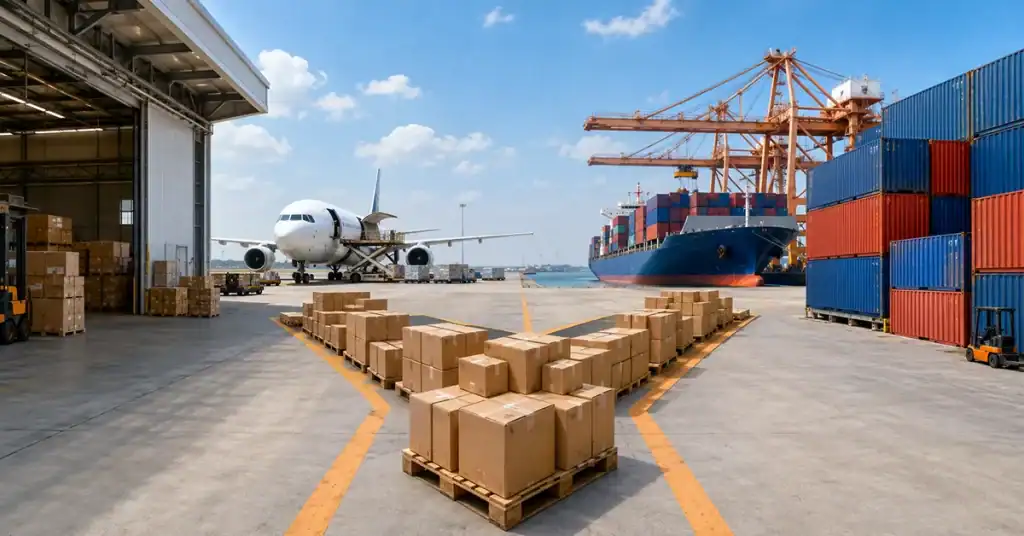
When Split Shipments from Yiwu Make Sense
A buyer may need samples, display stock, spare parts or a small launch quantity before the main order can arrive by sea. In another case, one supplier may finish late while the rest of a consolidated order is ready. Splitting can protect a sales deadline without moving every carton by expensive air freight.
Consider a split when the early cargo has a clear business purpose, the products are accepted for air transport and the warehouse can identify them accurately. If the entire order is low value and non-urgent, one consolidated sea shipment may remain simpler.
Products and Shipping Risks to Review
Start with a product-level list rather than a supplier-level guess. One supplier may produce both urgent and non-urgent items. Record the SKU, description, quantity, carton count, dimensions, gross weight, unit value and required arrival date for each allocation.
Air carriers may restrict batteries, liquids, powders, magnets, aerosols, sharp items and other special cargo. Sea freight has its own declaration and packing requirements. Do not move a product into the air group until the forwarder confirms acceptance for the actual route and packaging.
Buyers combining several suppliers can review this mixed-container shipping guide before deciding which goods should stay together.
Air, Sea and Courier Differences
| Factor | Air Freight | Sea Freight | Courier |
|---|---|---|---|
| Best use | Urgent commercial quantities | Bulk and less urgent cargo | Samples and small parcels |
| Pricing basis | Actual or volumetric weight | Volume, container or shipment terms | Chargeable parcel weight |
| Packaging priority | Low weight with safe protection | Stacking and moisture resistance | Compact, strong parcel packaging |
| Planning risk | High cost for bulky goods | Longer transit and sailing changes | Restrictions and remote-area fees |
Transit quotations should not be treated as guaranteed arrival dates. Allow time for supplier completion, warehouse receiving, inspection, export handling, carrier schedules, destination clearance and delivery.
Calculate the Complete Cost of Split Shipments from Yiwu
Compare at least three scenarios: all goods by sea, urgent goods by air with the balance by sea, and a smaller courier parcel with the balance by sea. Use the same product list and destination assumptions in each calculation.
Include supplier collection, warehouse handling, inspection, repacking, document preparation, export declaration, air or sea freight, destination charges, duties, taxes and final delivery where applicable. Splitting may also reduce the efficiency of the sea load. Our 20GP container capacity guide helps buyers assess space before removing cartons.
Need an Air-and-Sea Cost Comparison?
Send Goldenshiny your supplier list, carton estimates, destination and required dates. We can prepare a practical allocation and identify the China-side handling needed for each route.
Plan Consolidation for Split Shipments from Yiwu
The warehouse should receive every carton under an order number and supplier reference. Staff then need a controlled air list and sea list. Labels should make the route obvious without covering the supplier or destination marks.
Do not split by opening random cartons after loading begins. Confirm the allocation before packing lists and customs documents are finalized. If a carton contains mixed SKUs, decide whether it must be opened and repacked or remain under one route. Learn how container consolidation in Yiwu organizes multiple suppliers before loading.
Inspection and Packaging for Split Shipments from Yiwu
Inspect each route against its own allocation. The air inspection should confirm the urgent SKUs, quantities, packaging and labels. The sea inspection should verify the remaining goods and ensure the split did not create shortages.
Air packaging should avoid unnecessary volumetric weight while protecting the product. Sea packaging must tolerate longer handling, stacking and possible humidity exposure. Arrange cargo inspection before shipping from China while repacking or correction remains possible.
Customs and Documentation Requirements
Each shipment needs documents matching the goods physically dispatched. Product descriptions, quantities, values, weights and carton numbers must be consistent. If one purchase order is divided, records should show which units moved by air and which remained for sea shipment.
Ask the forwarder and destination broker whether separate invoices, packing lists, declarations, licences or certificates are required. Requirements depend on the products, route and importing country. Never copy the full-order quantity onto both shipment documents.
Timing the Air Dispatch and Sea Loading
The fastest route is not useful if urgent goods wait in the warehouse for the rest of the order. Set a decision deadline: which products must be available by that date, when inspection will occur and when the air group will be released.
At the same time, protect the sea booking. Removing cargo late can change container utilization, LCL volume and loading plans. Review current Yiwu Market sourcing trends when seasonal demand or production timing may affect availability.
Common Split-Shipment Mistakes
- Comparing only air and ocean freight without local or destination charges.
- Choosing urgent products without checking air-transport restrictions.
- Using supplier names instead of SKU-level allocation records.
- Changing quantities after invoices and packing lists are prepared.
- Failing to inspect the air and sea groups separately.
- Removing cartons without recalculating sea volume and loading space.
- Promising arrival dates that exclude clearance and final delivery.
Price control matters, but cutting a handling step can create a larger error. These Yiwu Market money-saving tips explain why complete-cost decisions are more useful than the lowest visible quote.
Why Local Yiwu Shipping Coordination Matters
A local team can follow supplier completion, receive cartons, separate SKUs, arrange inspection, update packing records and deliver each group to the correct forwarder. This reduces the risk that urgent goods remain in the sea load or non-urgent goods are sent by costly air freight.
Local coordination cannot guarantee carrier schedules or customs clearance. Its value is controlling the China-side evidence and handover. Buyers sourcing in District 2 can also review the Yiwu Market District 2 Section G guide while planning supplier collection.
Request a Split-Shipment Plan
Goldenshiny can review your supplier list, identify urgent cargo, coordinate consolidation and inspection, and prepare separate air and sea handovers. You approve the allocation before either shipment is released.
Split Shipments from Yiwu Checklist
- Define the commercial deadline for urgent products.
- Create an SKU-level air, sea and hold list.
- Confirm restrictions and document requirements.
- Calculate complete costs for each scenario.
- Check the effect on sea volume and container space.
- Receive and label cartons by route.
- Inspect each allocation separately.
- Approve final invoices and packing lists.
- Record each warehouse-to-forwarder handover.
Frequently Asked Questions
Can I send urgent Yiwu products by air and the rest by sea?
Yes, if the products are accepted for air transport and the warehouse, inspection and documents clearly separate both allocations.
Is splitting always cheaper than shipping everything by air?
Often, but not automatically. Include duplicated handling, documentation, destination charges and changes to sea-shipment efficiency.
Should I wait for every supplier before sending the air cargo?
Not necessarily. Set a cutoff based on the urgent SKUs and business deadline, while confirming how late products will join the sea shipment.
Can one invoice cover both shipments?
Document requirements vary. Each shipment must accurately describe its actual goods, quantities and values, so confirm the structure with the forwarder and customs professionals.
Conclusion
Split Shipments from Yiwu only when the early-delivery benefit justifies the added handling and documentation. Identify urgent SKUs, confirm transport restrictions, compare complete costs, separate cartons in the warehouse and inspect both groups. A controlled plan lets buyers use air freight selectively while keeping bulk cargo on an economical sea route.
Planning to source products from Yiwu Market? Our professional Yiwu sourcing team helps international buyers with airport pickup, Yiwu market guidance, supplier negotiation, order tracking, product inspection, warehousing, container loading, China customs, and international shipping.
👉 Learn more about our Yiwu Agent services or contact us to get a free sourcing consultation.
Related Articles:
Why You Need a Yiwu Agent | Sourcing Cases | Shipping Cases
Where Is Yiwu Market Located | How to fly to Yiwu | Yiwu Hotels | Yiwu Restaurants | Yiwu Market Full Guide | Why Yiwu Is Famous | Yiwu Market Secrets | Yiwu Market Buying Tips | How to Apply Chinese Visa
What’s the MOQ in Yiwu Market? | Yiwu Market Product List | Yiwu Market Price List | Top 10 Mistakes to Avoid in Yiwu Market | Top 10 Popular Products in Yiwu Market | Best Time to Import from Yiwu Market | Is It Safe to Import From Yiwu Market | Yiwu Market History
Popular Articles:
Yiwu Market District 1 | Yiwu Market District 2 F Section | Yiwu Market District 2 G Section | Yiwu Market District 3 | Yiwu Market District 4 | Yiwu Market District 5 | Yiwu Market New District 6
Yiwu Market Products | Yiwu Market Map | Yiwu Market Process | Warehousing & Quality Control | Feature | FAQ
Follow Our Social Media:
Youtube | Facebook | Instagram | LinkedIn | Pinterest | TikTok | Threads | Twitter | Reddit