
Yiwu International Trade City is the first stop for many importers, and for good reason. Still, knowing what Yiwu market doesn’t sell is just as useful as knowing what it does. Every month, buyers send us product lists that mix Yiwu goods with tiles, computer parts or farm chemicals. Those products are made in China, but mostly not in Yiwu.
This guide explains where Yiwu’s range ends and which Chinese cities specialise in the rest. It also shows how to plan one trip that covers several categories, so you don’t fly to the wrong city.
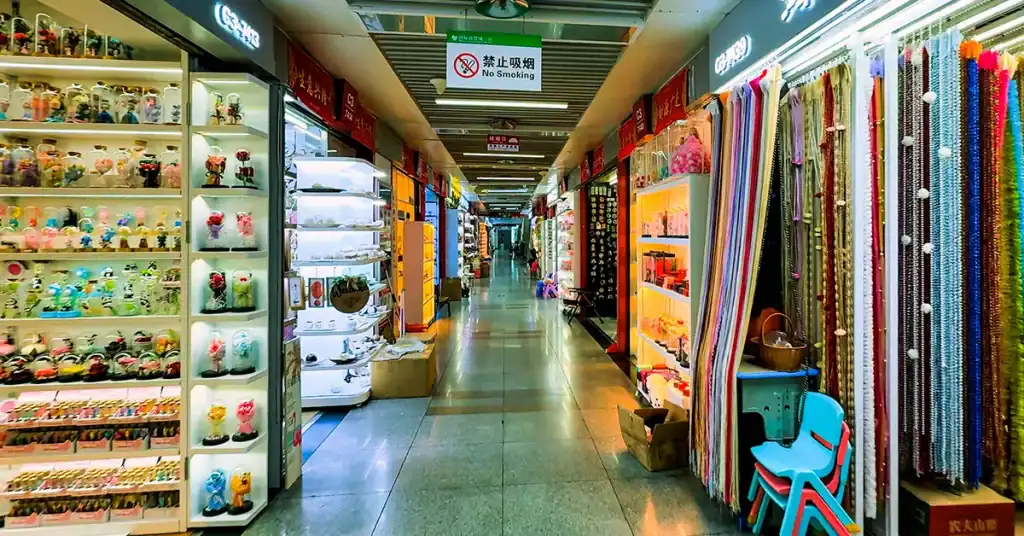
What Yiwu Market Is Built For: Small Commodities
Yiwu is a small-commodity market. In other words, it sells everyday goods that fit in a carton and sell in high volume. The main market, Yiwu International Trade City, spreads over five districts with around 75,000 booths. Broadly, the range looks like this:
- District 1: toys, artificial flowers, jewelry and hair accessories
- District 2: hardware, small electrical goods, bags, umbrellas and locks
- District 3: stationery, sports goods, cosmetics and glasses
- District 4: socks, underwear, gloves, scarves and daily necessities
- District 5: imported goods, bedding, knitting materials and car accessories
The model works because hundreds of suppliers stock similar items side by side. As a result, you can compare prices quickly and build a mixed container at low MOQs. For the full range, see our Yiwu market product list, or start with our shortlist of what to buy in Yiwu.
What Yiwu Market Doesn’t Sell, or Sells Only as Samples
The gaps usually come from size, technical depth or regulation. Here are the categories we see most often on buyer lists that Yiwu can’t cover well.
Building Materials and Tiles
Floor tiles, sanitary ware, stone, glass and structural steel are heavy and sold by the container. You may find door handles, taps or small fittings in District 2. However, there are no large tile showrooms and no factory-direct project pricing.
Electronic Components and Computer Parts
Yiwu sells chargers, earphones, LED lights and other simple consumer electronics. It does not stock chips, circuit boards, computer parts or modules in any depth. Buyers who need these will find thin choice and little technical support.
Furniture and Project Lighting
Yiwu has plenty of home decor and small lamps. Yet full furniture collections, hotel lighting and custom fixtures need a specialist cluster with its own factories and showrooms.
Chemicals, Machinery and Regulated Products
Agricultural chemicals, industrial chemicals, medicines and production machinery are not sold from market booths. Instead, they require licensed manufacturers, technical documents such as safety data sheets, and often dangerous-goods shipping.
Where in China to Source Those Products Instead
Once you know what Yiwu market doesn’t sell, the next question is where to go instead. Fortunately, China’s manufacturing is organised in clusters. Each city tends to focus on a few product families, so choosing the right city matters more than choosing the right market. These are the usual alternatives.
Electronics and Components: Shenzhen
Shenzhen is China’s electronics hub. Its Huaqiangbei district packs components, modules and finished gadgets into multi-storey malls, with factories nearby for OEM work. Our Shenzhen electronics market guide explains how the malls work. Meanwhile, our Yiwu vs Shenzhen sourcing comparison helps you split a mixed list.
Tiles, Sanitary Ware and Furniture: Foshan
Foshan in Guangdong is the usual answer for building materials. China Ceramics City in Chancheng District is its best-known tile showroom complex. For furniture, Lecong has large wholesale malls, while nearby Longjiang is a major furniture manufacturing base.
Lighting: Guzhen, Zhongshan
Guzhen town in Zhongshan is known as the “Lighting Capital of China”. It combines lighting factories, showrooms and a long-running trade fair. According to the Zhongshan government, the 34th Guzhen International Lighting Fair drew more than 3,600 exhibiting companies.
Fabric: Keqiao, Shaoxing
For fabric, look at China Textile City in Keqiao, Shaoxing. According to China Daily, the market recorded about 401 billion yuan in transactions in 2024. Better still, Keqiao is in Zhejiang, like Yiwu, so it fits easily into the same trip.
Fashion and Leather Goods: Guangzhou
Guangzhou’s wholesale clothing markets follow trends faster than Yiwu, and the city also has dedicated leather and bag markets. It suits buyers who restock fashion lines often.
Chemicals and Machinery: Go to the Manufacturer
There is no wholesale market for these products. Instead, you work directly with verified manufacturers, check export licences and documents, and plan compliant shipping. A specialist agent or trading company in that field is often the safer route.
Planning One Trip for Mixed Categories
In our recent inquiries, about a quarter of buyers wanted three or more unrelated categories on one trip. That is possible, but it needs planning. Follow these steps:
- Split your list into Yiwu goods and specialist goods before you book flights.
- Group the specialist cities by region. Yiwu and Keqiao are both in Zhejiang, while Shenzhen, Foshan, Zhongshan and Guangzhou sit close together in Guangdong.
- Allow a travel day between regions, because Zhejiang and Guangdong are far apart.
- Decide early how to ship. You can ship each region separately or bring goods to one consolidation warehouse.
- Check regulated items, such as chemicals or batteries, before you commit to suppliers.
Trade fairs can also help. For example, the Canton Fair in Guangzhou covers many categories Yiwu doesn’t, from building materials to machinery. If your dates match, see how to register for the Canton Fair.
How a Yiwu Agent Can Still Help Outside Yiwu
A Yiwu agent knows Yiwu best, but that knowledge still helps elsewhere. Before your trip, an agent can review your list and flag what Yiwu market doesn’t sell. That alone saves wasted days walking the districts.
Beyond that, many agents can help with:
- Searching for suppliers in other cities and checking them before you visit
- Booking factory visits and arranging transport between cities
- Inspecting goods made outside Yiwu before they ship
- Consolidating orders from several cities with your Yiwu goods
For highly technical or regulated goods, however, a specialist may serve you better, and a good agent will say so upfront. So send your full product list before you book. That way, you will know exactly which items to buy in Yiwu and where to find the rest.
Planning to source products from Yiwu Market? Our professional Yiwu sourcing team helps international buyers with airport pickup, Yiwu market guidance, supplier negotiation, order tracking, product inspection, warehousing, container loading, China customs, and international shipping.
👉 Learn more about our Yiwu Agent services or tell us about your visit to get a free sourcing consultation.
Related Articles:
Why You Need a Yiwu Agent | Sourcing Cases | Shipping Cases
Where Is Yiwu Market Located | How to fly to Yiwu | Yiwu Hotels | Yiwu Restaurants | Yiwu Market Full Guide | Why Yiwu Is Famous | Yiwu Market Secrets | Yiwu Market Buying Tips | How to Apply Chinese Visa
What’s the MOQ in Yiwu Market? | Yiwu Market Product List | Yiwu Market Price List | Top 10 Mistakes to Avoid in Yiwu Market | Top 10 Popular Products in Yiwu Market | Best Time to Import from Yiwu Market | Is It Safe to Import From Yiwu Market | Yiwu Market History
Popular Articles:
Yiwu Market District 1 | Yiwu Market District 2 F Section | Yiwu Market District 2 G Section | Yiwu Market District 3 | Yiwu Market District 4 | Yiwu Market District 5 | Yiwu Market New District 6
Yiwu Market Products | Yiwu Market Map | Yiwu Market Process | Warehousing & Quality Control | Feature | FAQ
Follow Our Social Media:
Youtube | Facebook | Instagram | LinkedIn | Pinterest | TikTok | Threads | Twitter | Reddit