
When sourcing products from China, two popular options stand out: Yiwu Market vs Made-in-China.com. While both provide access to thousands of suppliers, their approaches differ significantly.
This article will compare these platforms in terms of product range, pricing, minimum order quantities (MOQs), supplier reliability, and overall ease of sourcing. By the end, you’ll know which is best for your business.
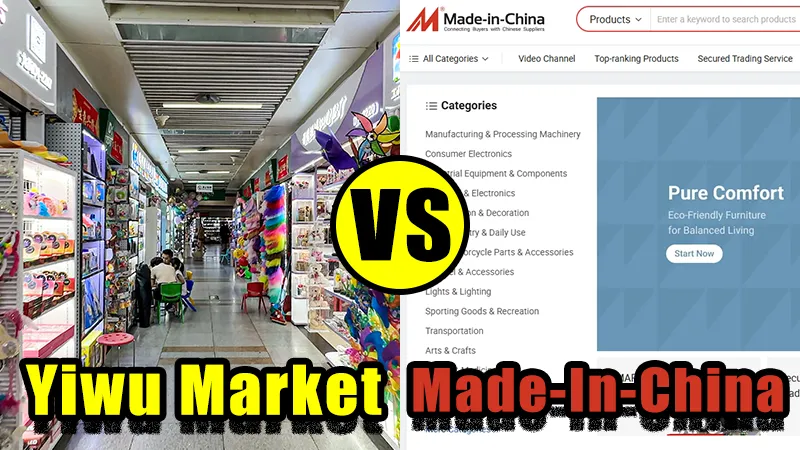
1. Understanding Yiwu Market vs Made-in-China.com
What is Yiwu Market?
Yiwu Market, located in Yiwu, Zhejiang Province, China, is the largest wholesale market in the world. It consists of:
1. Over 75,000 suppliers across five districts.
2. A diverse range of small commodities like fashion accessories, toys, home decor, and electronics.
3. A physical marketplace where buyers can inspect products in person.
4. A focus on low-cost, bulk purchasing with small MOQs.
Yiwu Market is a go-to destination for importers, wholesalers, and small business owners looking for cost-effective sourcing options.
What is Made-in-China.com?
Made-in-China.com is a B2B online marketplace that connects global buyers with Chinese manufacturers and wholesalers. It features:
1. Millions of products across various industries.
2. Direct factory sourcing from manufacturers across China.
3. Custom manufacturing options for private label and OEM products.
4. A digital platform for browsing, ordering, and negotiating prices.
Unlike Yiwu Market, Made-in-China.com operates entirely online, making it ideal for businesses that prefer digital sourcing.
2. Product Range Comparison
Yiwu Market: Best for Small Commodities
Yiwu Market specializes in small, everyday consumer goods, including:
Fashion accessories (bags, jewelry, scarves)
Home decor and gifts
Toys and stationery
Electronics and phone accessories
Most products here are mass-produced, ready-to-ship items at competitive prices.
Made-in-China.com: Wide Industrial Product Selection
Made-in-China.com covers a broader range of industries, such as:
Machinery and industrial equipment
Electronics and electrical components
Home appliances and furniture
Medical and healthcare products
It is the better option for customized orders, bulk production, and niche industries.
3. Pricing and Cost Differences
Yiwu Market: Low Prices, Wholesale Focus
Products in Yiwu Market are typically cheaper due to bulk production.
Ideal for small businesses looking for budget-friendly wholesale items.
Buyers negotiate prices directly with suppliers, making it possible to get better deals.
Made-in-China.com: Flexible Pricing with Larger MOQs
Prices vary depending on factory production costs and order sizes.
Many manufacturers on the platform require higher MOQs than Yiwu Market.
Custom orders may come with added costs like mold fees or design charges.
If you need ready-made wholesale items, Yiwu Market is more cost-effective. If you need custom manufacturing, Made-in-China.com is a better option.
4. Minimum Order Quantity (MOQ) Comparison
Yiwu Market: Lower MOQs for Small Buyers
Many suppliers offer low MOQs (as low as one carton per item).
Some stalls allow mixed orders from different suppliers.
Ideal for new businesses, small retailers, and Amazon FBA sellers.
Made-in-China.com: Higher MOQs for Factories
Factory-direct suppliers often require higher MOQs (hundreds to thousands of units).
Some manufacturers offer sample orders, but bulk production is the norm.
Better for established businesses with higher purchasing power.
Yiwu Market is better for small-scale buyers, while Made-in-China.com suits large-scale sourcing.
5. Supplier Reliability and Quality Control
Yiwu Market: Face-to-Face Interaction for Quality Checks
Buyers can visit suppliers in person and inspect products.
Some suppliers may offer lower quality items, so due diligence is needed.
Third-party quality inspections are recommended before shipping.
Made-in-China.com: Verified Manufacturers but Limited Inspections
Many suppliers are verified by the platform, reducing fraud risks.
Buyers cannot physically inspect products unless they hire inspection services.
Reviews and supplier ratings help assess reliability.
For hands-on quality control, Yiwu Market is better. For factory production with certifications, Made-in-China.com is more reliable.
6. Ease of Ordering and Logistics
Yiwu Market: In-Person Purchasing with Shipping Arrangements
Buyers must visit in person or work with a sourcing agent.
Shipping must be arranged by a local Yiwu agent.
Ideal for businesses that prefer to see products before purchasing.
Made-in-China.com: Online Ordering with Supplier Shipping
Entirely online ordering process with global shipping.
Suppliers often handle export logistics, making it more convenient.
Suitable for businesses that cannot visit China in person.
If you want an on-site experience, Yiwu Market is ideal. If you prefer hassle-free online sourcing, Made-in-China.com is more convenient.
7. Which is Better for Your Business?
Choose Yiwu Market If:
1. You need low-cost, small MOQ wholesale products.
2. You prefer in-person sourcing and quality inspections.
3. You are a medium-small business.
4. You want to buy ready-made goods quickly.
Choose Made-in-China.com If:
1. You need customized, large-scale manufacturing.
2. You prefer online sourcing and direct factory orders.
3. You require industrial or niche products.
4. You run a large business with higher order quantities.
Conclusion: Yiwu Market vs Made-in-China.com—Which Should You Choose?
Both Yiwu Market and Made-in-China.com offer unique advantages for sourcing products from China. Your choice depends on your business size, sourcing needs, and budget.
• Yiwu Market is best for wholesale buyers looking for affordable, ready-made products with low MOQs.
• Made-in-China.com is ideal for custom manufacturing, larger orders, and direct factory sourcing.
If you’re unsure, you can combine both methods—use Yiwu Market for small wholesale orders and Made-in-China.com for bulk or custom manufacturing.
By understanding the strengths of each platform, you can make the best sourcing decision for your business.
Related Posts
Yiwu vs Shenzhen Sourcing: Where Should You Source?
Looking for a professional Yiwu agent to simplify importing from the Yiwu market? Visit our homepage to discover expert assistance that makes your sourcing and shipping easier, faster, and more efficient.
More about the Yiwu market: Yiwu Market District 1 | Yiwu Market District 2 F Section | Yiwu Market District 2 G Section | Yiwu Market District 3 | Yiwu Market District 4 | Yiwu Market District 5 | Yiwu Market Products | Yiwu Market Map | Yiwu Market Process | How to reach Yiwu | Why You An Agent to Import from Yiwu Market | Types of Suppliers in Yiwu Market
Follow Our Social Media: Youtube | Facebook | Instagram | LinkedIn | Pinterest | TikTok | Threads | Twitter | Tumblr | Reddit