
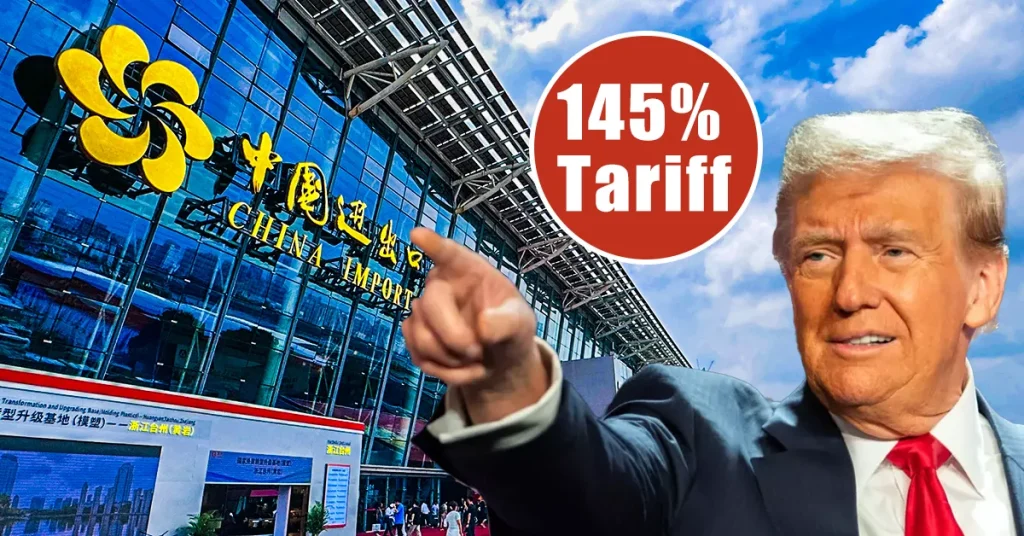
The Canton Fair 2025 Spring has become more than just a trade event—it’s now a focal point of global economic tension. With former President Trump reinstating a staggering 145% tariff on Chinese goods in April 2025, international buyers, Chinese exporters, and sourcing agents are scrambling to adjust. This article explores how these sweeping tariffs are reshaping dynamics at the Canton Fair and how businesses can adapt strategically. Whether you’re a seasoned importer or exploring the fair for the first time, understanding the impact of the US-China trade war is essential to making informed decisions.
What Is the Canton Fair 2025 Spring?
Overview of the Canton Fair
The Canton Fair, also known as the China Import and Export Fair, is the largest trade exhibition in China. Held in Guangzhou every spring and autumn, it brings together over 25,000 exhibitors and 200,000 global buyers.
Dates and Phases
Canton Fair 2025 Spring spans three phases:
- Phase 1: April 15–19 (Electronics, Building Materials, Industrial Products)
- Phase 2: April 23–27 (Consumer Goods, Gifts, Home Decorations)
- Phase 3: May 1–5 (Textiles, Clothing, Medical Products, Food)
Strategic Importance in 2025
This year’s spring fair is not just about showcasing products—it’s about navigating uncertainty in the midst of trade conflict.
US-China Trade War: The Return of Trump Tariffs
April 2025: Trump’s 145% Tariff Announcement
In a surprise move on April 8, 2025, Donald Trump, now running for re-election, announced a 145% tariff on all Chinese imports, citing national security and unfair trade practices.
A Brief History of US-China Tariff Battles
The current tension isn’t new. The original trade war peaked during Trump’s first presidency (2018–2020) with 25%–50% tariffs on Chinese goods. Biden later rolled some back, but Trump’s 2025 campaign has re-escalated tensions.
How the Tariffs Are Affecting the Canton Fair 2025 Spring
Decline in US Buyer Participation and Order Cancellations
At the Canton Fair, US buyers are notably fewer, and those present are cautious, often refraining from placing new orders due to tariff uncertainties. For example, companies like Guangdong Gales Electrical Appliance and Foshan Zero Point Intelligent Electrical Appliance reported that US clients have stopped orders or requested shipments be returned mid-transit. This has led to production slowdowns and workforce reductions in affected factories.
Chinese Manufacturers Seek New Markets and Diversify Products
In response, many Chinese exporters are aggressively pursuing alternative markets outside the US. The Canton Fair has become a critical platform for showcasing new proprietary brands and expanding into regions such as Russia and Southeast Asia. Exhibitors emphasize resilience by diversifying supply chains and tailoring products to fit different international demands.
Domestic Market Expansion and Government Support
Chinese companies are also focusing on boosting domestic sales to offset export losses. The government has pledged support to help manufacturers pivot towards the local market, which is increasingly vital in the face of external trade barriers. This shift underscores the dual strategy of seeking new global markets while strengthening domestic consumption.
Supplier Strategies: Absorb or Pass on the Tariff?
Many Chinese exporters are debating whether to:
- Absorb part of the tariff to remain competitive
- Shift operations to Vietnam or Bangladesh
- Increase FOB prices and pass costs to the buyer
Popular Categories Impacted Most
Products heavily impacted by the 145% tariff include:
- Consumer electronics
- Machinery and industrial parts
- Apparel and textiles
- Home appliances
Strategic for Buyers Attending Canton Fair 2025 Spring
1. Diversified Sourcing Locations
Leverage the Canton Fair to meet suppliers with overseas manufacturing plants, especially in ASEAN countries like Vietnam, Thailand, or Malaysia.
2. Negotiate FOB Terms Instead of CIF
FOB allows greater control over shipping routes and tariffs. Buyers should emphasize FOB over CIF to better manage total landed costs.
3. Strengthen QC and Compliance Reviews
With suppliers shifting operations rapidly, quality consistency is a concern. Always conduct factory audits and pre-shipment inspections.
4. Explore Long-Term Warehousing in China or Nearby
Use bonded warehouses in China or free trade zones in Malaysia to store goods and ship strategically in batches to reduce immediate tariff burdens.
Key Exhibitor Insights: Sectors Most Affected
Electronics & Machinery Exhibitors
Seeing the steepest declines in US interest, these suppliers are aggressively targeting EU and South American buyers with bundle deals and customization offers.
Textile & Apparel Sellers
With more agile production lines, these sellers are offering small MOQ, quick sampling, and flexible delivery schedules to stay competitive.
Giftware and Household Goods
Less impacted by tariffs, but prices are creeping up due to raw material cost increases and RMB fluctuation.
Alternatives to Canton Fair Amid Trade Tensions
1. Yiwu Market and Zhejiang Fairs
These regional fairs remain strong, especially for SME buyers focused on low MOQ and fast lead times.
2. Keqiao Textile Expo
Textile buyers are increasingly favoring Keqiao for its vertical supply chain integration and strong fabric testing infrastructure.
3. Sourcing Platforms with Global Warehousing
Alibaba, 1688, and Made-in-China are offering enhanced overseas shipping and warehousing options to bypass direct China–US trade routes.
Long-Term Implications: What’s Next for Global Trade?
Will the Tariffs Hold After the US Election?
With the 2025 US presidential election in November, the tariff policies may change dramatically depending on who wins. Many buyers are using the fair to build strategic reserves or sign short-term contracts.
China’s Pivot Strategy
China is accelerating RCEP partnerships, BRI investments, and yuan-settled trades to reduce dependence on US markets. Canton Fair 2025 Spring reflects this pivot with expanded booths from Belt & Road countries.
Sourcing Risk Mitigation
Global buyers are now dividing their sourcing across multiple countries, and using data analytics to forecast and mitigate future geopolitical risks.
Conclusion: Canton Fair 2025 Spring – A Turning Point in Global Sourcing
The Canton Fair 2025 Spring isn’t just a trade show—it’s a barometer of global supply chain resilience in a time of uncertainty. Trump’s 145% tariff move is sending shockwaves through every aisle of the fair. But for savvy importers and adaptive suppliers, it also offers an opportunity to reinvent strategies, diversify supply bases, and build stronger cross-border partnerships. Stay informed, stay agile, and use this fair as a launchpad for smarter global sourcing.
Related Articles:
How to Get the Most Out of Canton Fair | Why Importers Visit Yiwu After Canton Fair | Canton Fair 2025 | Canton Fair 2025 Phase 1 | Canton Fair 2025 Phase 2 | Canton Fair 2025 Phase 3 | Canton Fair Hotel | Canton Fair vs Yiwu Fair | How to Plan Your Yiwu Sourcing Trip During Canton Fair Season
Popular Articles:
Yiwu Market District 1 | Yiwu Market District 2 F Section | Yiwu Market District 2 G Section | Yiwu Market District 3 | Yiwu Market District 4 | Yiwu Market District 5 | Yiwu Market Products | Yiwu Market Map | Yiwu Market Process | Sourcing Cases | Shipping Cases | Warehousing & Quality Control | Yiwu City Overview | Feature
Follow Our Social Media:
Youtube | Facebook | Instagram | LinkedIn | Pinterest | TikTok | Threads | Twitter | Tumblr | Reddit