
If you have ever wondered how a small agricultural county in eastern China became the world’s largest wholesale market, the answer lies in the Yiwu Market history. In short, Yiwu Market did not rise overnight. Instead, it evolved step by step—from informal street trading in the 1970s, to China’s first officially recognized small commodities market in the 1980s, and finally into today’s Yiwu International Trade City serving global buyers. By understanding this history, importers and business owners can better grasp why Yiwu Market still plays a unique role in global sourcing.
Today, Yiwu Market is not just a place to buy products. Rather, it is a living example of how policy, entrepreneurship, and market demand combined to create a global trade hub. Therefore, exploring the Yiwu Market history helps explain why millions of buyers continue to source from Yiwu every year.
Yiwu Market History Before the 1980s: Survival Trading in Rural China
To understand the Yiwu Market history, it is essential to look at the period before formal markets existed. During the 1960s and 1970s, Yiwu was a poor rural area with limited farmland and few industrial opportunities. As a result, many local residents struggled to make a living through agriculture alone.

However, instead of relying solely on farming, Yiwu people began traveling to nearby provinces to exchange small goods for daily necessities. For example, they traded items such as buttons, sugar, feathers, and needles. Although private trading was restricted at that time, this form of exchange became a practical way to survive. Consequently, Yiwu developed a strong grassroots trading culture long before official approval.
More importantly, this early trading behavior laid the foundation for Yiwu Market’s future growth. While there was no formal marketplace yet, the spirit of entrepreneurship had already taken root.
1982: Huqingmen Market and the Birth of Yiwu Market History
A major turning point in Yiwu Market history came in 1982. In that year, the local government officially opened Huqingmen Market, which is widely recognized as China’s first government-approved small commodities market. This decision was bold at the time, as private business activities were still sensitive.
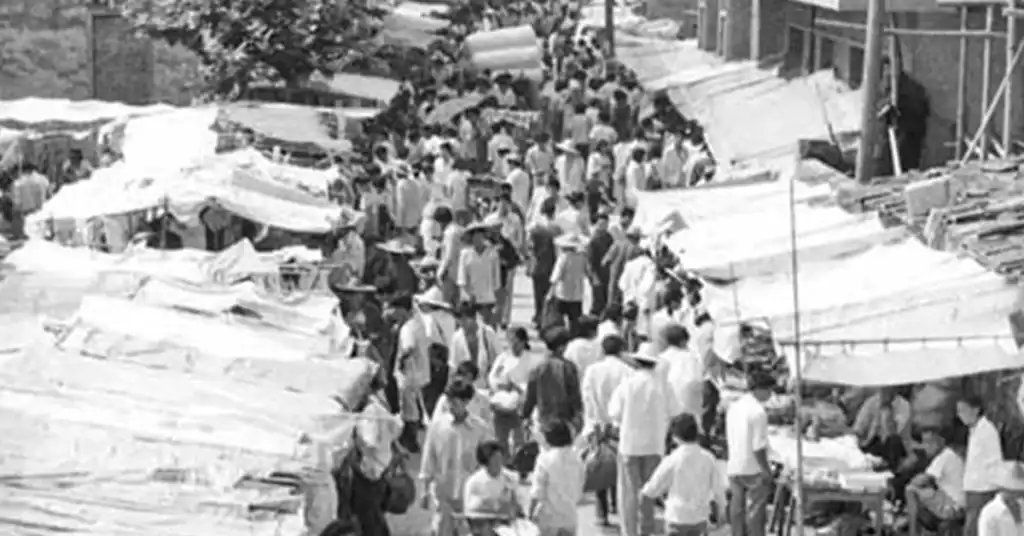
Nevertheless, the authorities in Yiwu chose a pragmatic approach. Instead of banning informal trading, they decided to regulate and guide it. As a result, vendors were allowed to operate legally in a designated area. Although the market was simple, with open-air stalls and basic facilities, it marked a historic breakthrough.
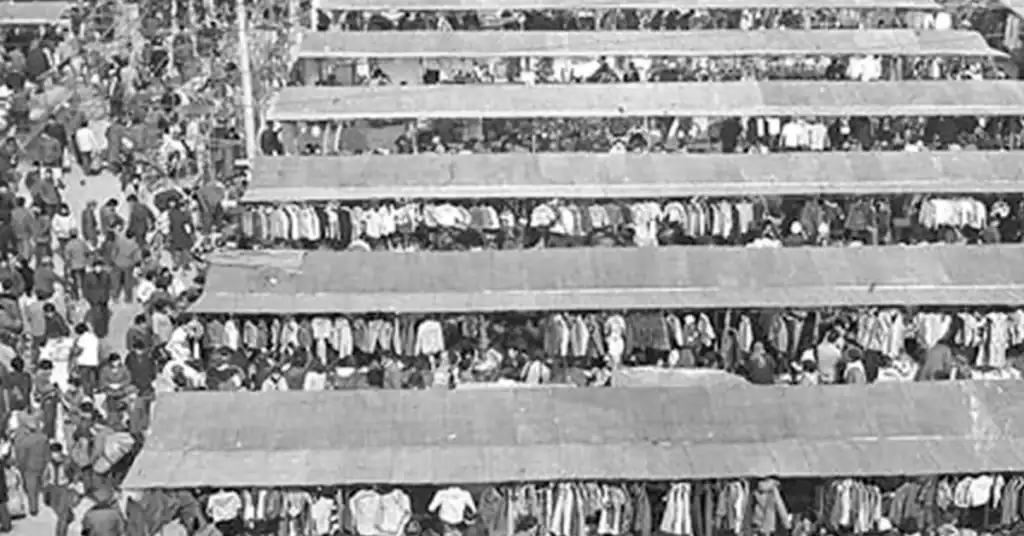
From that moment on, Yiwu Market began to grow in both scale and legitimacy. Importantly, Huqingmen Market proved that small commodities trading could be organized, taxable, and beneficial to the local economy.
Yiwu Market History in the Reform Era: Rapid Expansion in the 1990s
Following China’s economic reforms, Yiwu Market history entered a period of rapid expansion during the 1990s. As national policies became more supportive of private business, Yiwu seized the opportunity to upgrade its market infrastructure.
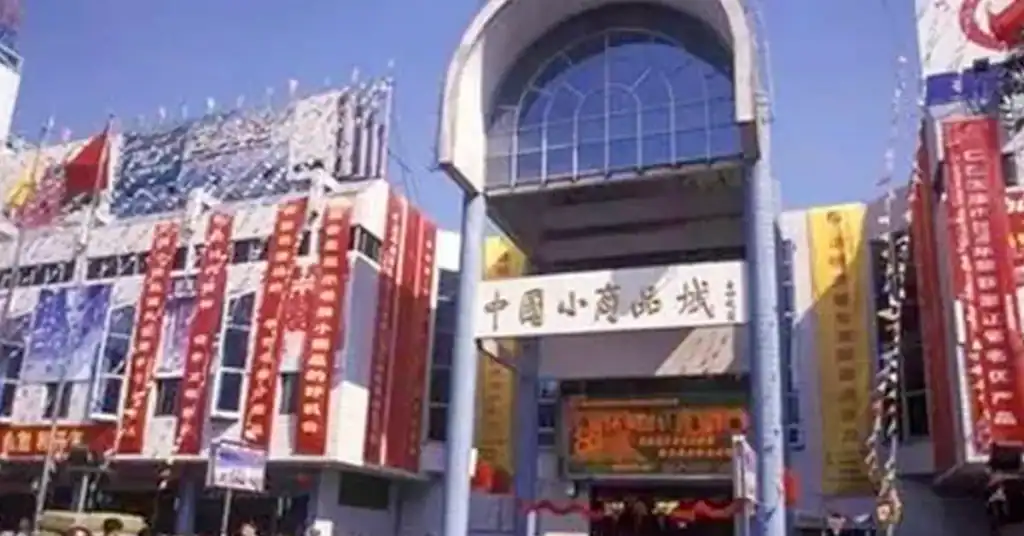
During this time, Yiwu Market moved from simple street stalls to more structured indoor markets. At the same time, the number of product categories increased significantly. Instead of selling only daily necessities, vendors began offering toys, stationery, hardware, accessories, and household goods.
Moreover, logistics and transportation improved steadily. Because highways and freight services expanded, goods from Yiwu could reach other Chinese cities more efficiently. Consequently, Yiwu Market gradually transformed from a local trading center into a national distribution hub.
Yiwu International Trade City History: Entering the Global Stage
When discussing Yiwu Market history, it is impossible to ignore the rise of Yiwu International Trade City. Starting in the early 2000s, Yiwu launched a series of large-scale market complexes that fundamentally changed its global role.
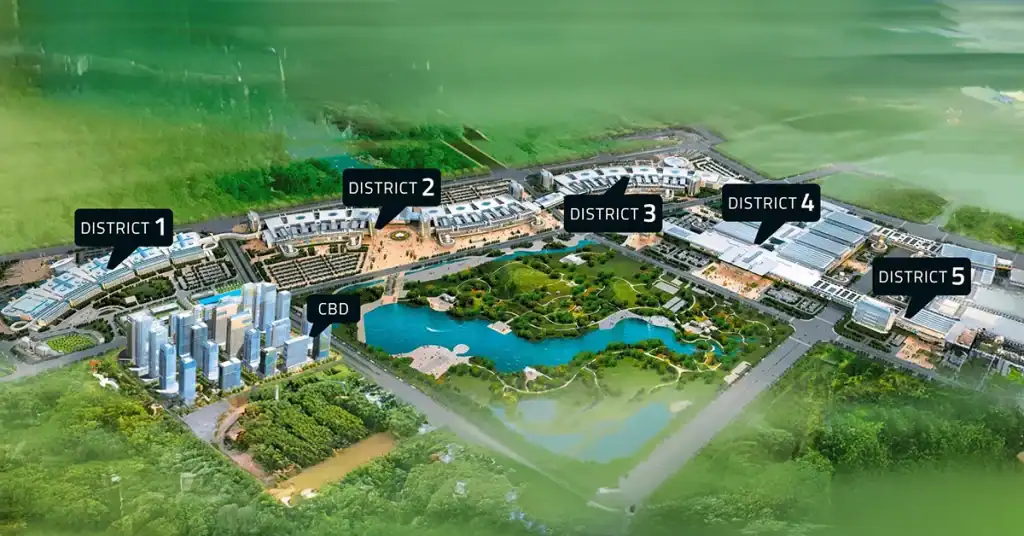
Yiwu International Trade City was developed in multiple phases, later known as Districts 1 to 5. Each district focused on different product categories, which greatly improved sourcing efficiency. As a result, international buyers could easily compare products, prices, and suppliers in one location.
At the same time, export-oriented services expanded rapidly. Customs clearance, international logistics, and foreign trade companies clustered around the market. Therefore, Yiwu Market history entered a new phase—one that was deeply connected to global trade.
Why Yiwu International Trade City Changed Yiwu Market History
First of all, Yiwu International Trade City standardized the wholesale environment. Clear booth numbering, category zoning, and long-term leases provided stability for suppliers. Secondly, it attracted buyers from the Middle East, Africa, Europe, and the Americas.
In addition, the market’s low minimum order quantities made it especially attractive to small and medium-sized importers. Consequently, Yiwu became known worldwide as a sourcing center for mixed products and flexible orders.
Yiwu Market History After 2010: Digitalization and Global Integration
After 2010, Yiwu Market history entered a more mature stage. Although physical markets remained the core, digital platforms began to play a growing role. Online marketplaces, digital catalogs, and cross-border e-commerce gradually integrated with traditional wholesale operations.

Meanwhile, Yiwu strengthened its international logistics network. For example, the Yiwu–Europe railway connected the city directly with multiple European destinations. As a result, Yiwu Market gained faster and more reliable shipping options for global buyers.
Furthermore, government support continued through policies that encouraged exports, simplified customs procedures, and promoted trade facilitation. Therefore, Yiwu Market maintained its competitive edge despite rising costs in other regions.

Why Yiwu Market History Matters to Importers Today
Understanding Yiwu Market history is not just about the past. On the contrary, it directly explains why Yiwu remains relevant today. Because the market evolved through real trading needs, it is highly practical and buyer-oriented.
For importers, Yiwu Market offers three key advantages. First, product variety is unmatched. Second, suppliers are accustomed to small and mixed orders. Third, the entire ecosystem—from sourcing to shipping—is well developed.
As a result, many global buyers prefer Yiwu Market over single-product industrial zones. In this sense, Yiwu Market history continues to shape modern sourcing strategies.
The Future of Yiwu Market: Continuing the Historical Advantage
Looking ahead, Yiwu Market history is still being written. While global trade conditions continue to change, Yiwu is actively adapting through digital trade, supply chain optimization, and service upgrades.
At the same time, the market is focusing more on compliance, branding, and quality improvement. Therefore, Yiwu is no longer only about low prices, but also about efficiency and reliability.
In conclusion, Yiwu Market history explains why this city remains a cornerstone of global wholesale trade. From survival trading to international sourcing, Yiwu Market has continuously evolved to meet real market demand.
Conclusion: Yiwu Market History as a Global Trade Lesson
The Yiwu Market history shows how grassroots entrepreneurship, supportive policy, and market demand can transform a small town into a global trade powerhouse. Although the journey began with simple street trading, it ultimately led to the creation of the world’s largest wholesale market.
For buyers, entrepreneurs, and researchers alike, Yiwu Market history offers valuable lessons. Most importantly, it proves that sustainable markets are built step by step, based on real needs rather than short-term trends.
Looking for a professional Yiwu agent to simplify importing from the Yiwu market? Visit our homepage to discover expert assistance that makes your sourcing and shipping easier, faster, and more efficient in Yiwu, China.
Related Articles:
Why You Need a Yiwu Agent | Sourcing Cases | Shipping Cases
Where Is Yiwu Market Located | How to fly to Yiwu | Yiwu Hotels | Yiwu Restaurants | Yiwu Market Full Guide | Why Yiwu Is Famous | Yiwu Market Secrets | Yiwu Market Buying Tips
What’s the MOQ in Yiwu Market? | Yiwu Market Product List | Yiwu Market Price List | Top 10 Mistakes to Avoid in Yiwu Market | Top 10 Popular Products in Yiwu Market | Best Time to Import from Yiwu Market
Top 10 Yiwu Market Sections | Top 10 Yiwu Market Product Categories | Top 10 Yiwu Market Tips | Top 10 Yiwu Market Insider Secrets | Top 10 Yiwu Market Mistakes to Avoid | Top 10 Benefits of Local Yiwu Agent | Top 5 Ways a Yiwu Agent Prevents Supplier Scams for Importers | Top 5 Advantages of Yiwu Sourcing Agents
Popular Articles:
Yiwu Market District 1 | Yiwu Market District 2 F Section | Yiwu Market District 2 G Section | Yiwu Market District 3 | Yiwu Market District 4 | Yiwu Market District 5 | Yiwu Market New District 6
Yiwu Market Products | Yiwu Market Map | Yiwu Market Process | Warehousing & Quality Control | Feature | FAQ
Follow Our Social Media:
Youtube | Facebook | Instagram | LinkedIn | Pinterest | TikTok | Threads | Twitter | Reddit