
Chinese New Year 2026 factory shutdown will begin in mid-February 2026, and most factories in China will close for 2–4 weeks, while production slowdowns may start 3–6 weeks earlier. If you import from China, you must plan shipments before the holiday rush. Otherwise, you risk delayed production, rising freight costs, and missed sales deadlines. This guide explains exactly how the Chinese New Year 2026 factory shutdown affects manufacturing, shipping, and inventory planning.
Because Chinese Lunar New Year is the most important holiday in China, factories, logistics companies, and suppliers close nationwide. Therefore, understanding this shutdown is essential for wholesalers, Amazon sellers, and container buyers. In this article, you will learn the shutdown timeline, shipping impact, production risks, and practical strategies to protect your supply chain.
What Is the Chinese New Year 2026 Factory Shutdown?
The Chinese New Year 2026 factory shutdown refers to the nationwide closure of factories during the Lunar New Year holiday. Although the official public holiday lasts around one week, actual factory closure often extends to 2–4 weeks.
Because millions of workers travel back to their hometowns, production stops almost completely. Moreover, many factories experience labor shortages even after reopening. Therefore, the real impact lasts longer than the official holiday.
For importers, this means production delays are predictable. However, without planning, those delays can seriously affect delivery schedules.
When Does Chinese New Year 2026 Factory Shutdown Start?
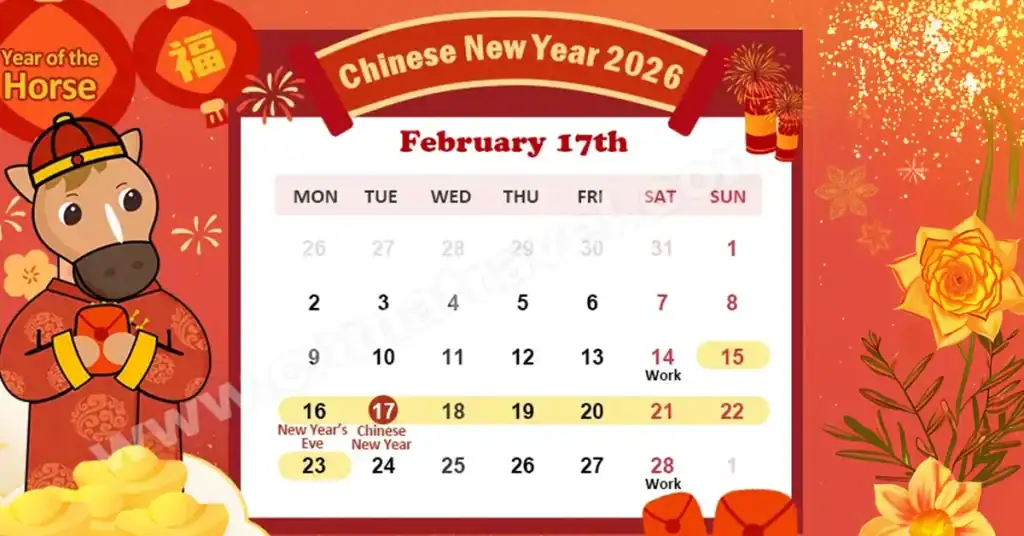
Chinese New Year 2026 falls on February 17, 2026. However, the Chinese New Year 2026 factory shutdown typically begins 7–10 days before the holiday.
In addition, production pressure increases throughout January. As a result, factories prioritize large orders and long-term clients first. Consequently, smaller buyers may experience earlier cut-off dates.
Most factories will:
- Stop accepting new orders 3–4 weeks before the holiday
- Stop production 7–10 days before the holiday
- Reopen 2–3 weeks after the holiday
- Resume full production 3–4 weeks after reopening
Therefore, although the public holiday is short, the real disruption lasts up to 6 weeks.
How Long Does the China Factory Closure Last?
While official holidays last about one week, the Chinese New Year 2026 factory shutdown can last much longer depending on the region and industry.
Small and Medium Factories
Small factories often close earlier and reopen later. Because they rely heavily on migrant workers, labor return rates can be slow. Therefore, some factories may not reach full capacity until late March.
Large Export Factories
Larger factories may reopen faster. However, even they face supply chain disruption. For example, raw material suppliers may still be closed. Consequently, production recovery takes time.
As a result, importers should assume at least 3–4 weeks of reduced output.
How Chinese New Year 2026 Factory Shutdown Affects Shipping
Although factories close, shipping does not stop completely. However, the Chinese New Year 2026 factory shutdown still impacts logistics significantly.
Pre-Holiday Shipping Rush
Before the holiday, factories rush to complete orders. Therefore, ports and freight forwarders experience heavy volume. As a result, container rates may rise.
Reduced Port Activity During Holiday
During the holiday week, port operations slow down. Although ports remain open, staffing is limited. Consequently, handling times may increase.
Post-Holiday Congestion
After reopening, factories release accumulated shipments. Therefore, vessel space can become tight. As a result, freight rates may temporarily increase.
For this reason, planning shipment dates around the Chinese New Year 2026 factory shutdown is essential.
Production Risks During Chinese New Year 2026 Factory Shutdown
Beyond delays, quality risks may also increase.
Rushed Production Before Holiday
When factories rush orders, quality control may weaken. Therefore, inspection before shipment becomes even more important.
Worker Turnover After Holiday
After the holiday, some workers do not return. Consequently, new workers require training. As a result, product quality may fluctuate.
Therefore, scheduling inspections after reopening is highly recommended.
How Importers Should Prepare for Chinese New Year 2026 Factory Shutdown
Although shutdown is unavoidable, strategic planning minimizes disruption.
Place Orders Early
Ideally, confirm production at least 6–8 weeks before the holiday. Therefore, January shipments should be finalized in November or December.
Advance Shipping Schedule
Whenever possible, ship before mid-January. As a result, you avoid peak freight pressure.
Increase Inventory Buffer
Because supply gaps can last several weeks, maintaining safety stock protects sales. Consequently, retailers reduce out-of-stock risk.
Communicate Clearly With Suppliers
Confirm shutdown dates, final shipment deadlines, and worker return schedules. Therefore, you avoid misunderstandings.
Why Chinese New Year 2026 Factory Shutdown Impacts Yiwu Buyers
If you source from Yiwu market, the impact is even more noticeable. Because Yiwu suppliers often handle mixed orders from multiple factories, delays may multiply.
For example, if one supplier reopens later, your entire container may be delayed. Therefore, coordination becomes critical.
How a Yiwu Agent Reduces Chinese New Year 2026 Factory Shutdown Risk
Although shutdown cannot be avoided, a professional Yiwu agent reduces risk significantly.
Centralized Order Management
Because agents coordinate multiple suppliers, they ensure all goods are ready before container booking. Therefore, shipment delays decrease.
Warehouse Consolidation
Instead of waiting for each supplier separately, agents consolidate products in one warehouse. Consequently, shipping efficiency improves.
Pre-Holiday Inspection
Quality checks before shutdown prevent post-holiday disputes. Therefore, your business avoids costly rework.
Ultimately, professional coordination reduces the operational risk caused by the Chinese New Year 2026 factory shutdown.
Frequently Asked Questions About Chinese New Year 2026 Factory Shutdown
Do all factories in China close?
Yes, most factories close for at least 1–2 weeks. However, reopening speed varies by region and industry.
Will shipping completely stop?
No, ports remain operational. However, reduced staffing may slow processing.
When should I ship to avoid delays?
Ideally, ship before mid-January 2026. Therefore, confirm production well in advance.
Final Thoughts on Chinese New Year 2026 Factory Shutdown
The Chinese New Year 2026 factory shutdown is predictable, yet many importers underestimate its impact. Although the official holiday is short, production slowdowns can last over a month. Therefore, early planning, clear communication, and strategic shipping are essential.
If you prepare properly, you can avoid delays, control freight costs, and protect your inventory. However, if you ignore the shutdown timeline, your supply chain may face unnecessary disruption. Therefore, treat Chinese New Year 2026 factory shutdown as a fixed event in your annual sourcing strategy.
Looking for a professional Yiwu agent to simplify importing from the Yiwu market? Visit our homepage to discover expert assistance that makes your sourcing and shipping easier, faster, and more efficient in Yiwu, China.
Related Articles:
Chinese New Year 2026 Yiwu Market: Holiday Notice | Yiwu Market After Chinese New Year 2026
Where Is Yiwu Market Located | How to fly to Yiwu | Yiwu Hotels | Yiwu Restaurants | Yiwu Market Full Guide | Why Yiwu Is Famous | Yiwu Market Secrets | Yiwu Market Buying Tips
What’s the MOQ in Yiwu Market? | Yiwu Market Product List| Yiwu Market Price List| Top 10 Mistakes to Avoid in Yiwu Market | Top 10 Popular Products in Yiwu Market | Best Time to Import from Yiwu Market | Is It Safe to Import From Yiwu Market | Yiwu Market History
Top 10 Yiwu Market Sections | Top 10 Yiwu Market Product Categories | Top 10 Yiwu Market Tips | Top 10 Yiwu Market Insider Secrets | Top 10 Yiwu Market Mistakes to Avoid | Top 10 Benefits of Local Yiwu Agent | Top 5 Ways a Yiwu Agent Prevents Supplier Scams for Importers | Top 5 Advantages of Yiwu Sourcing Agents
Popular Articles:
Yiwu Market District 1 | Yiwu Market District 2 F Section | Yiwu Market District 2 G Section | Yiwu Market District 3 | Yiwu Market District 4 | Yiwu Market District 5 | Yiwu Market New District 6
Yiwu Market Products | Yiwu Market Map | Yiwu Market Process | Warehousing & Quality Control | Feature | FAQ
Follow Our Social Media:
Youtube | Facebook | Instagram | LinkedIn | Pinterest | TikTok | Threads | Twitter | Reddit